
16 October 2026
Flat Roof Costs In Dartford: Garages, Extensions And Dormers
Flat roof repair and replacement costs in Dartford for 2026: garages, rear extensions, dormers and bays, felt vs EPDM vs GRP, and what pushes the price up.
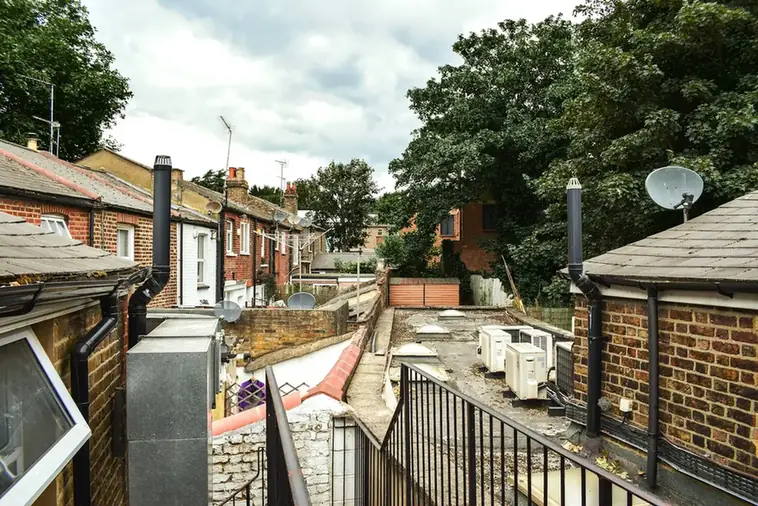
Look over the back fence of almost any street in Dartford and you’ll count flat roofs before you count chimneys. Kitchen extensions on Victorian terraces. Box dormers on 1930s semis. Rows of garages behind the postwar housing that followed the Temple Hill estate, whose first homes Clement Attlee opened in 1947. Most of them were never meant to last as long as the houses they’re attached to, and plenty are now on their second or third covering. This guide sets out what flat roof repair and replacement costs in Dartford in 2026, by type of roof. A single garage re-covered in EPDM usually runs £1,300 to £2,400. A typical 15m² rear extension in EPDM or GRP lands between £2,200 and £4,200. A small patch can be under £400. All prices include VAT and are a guide to what a survey is likely to confirm, not a quote.
Flat roof costs in Dartford at a glance
Start with the table, then read the section for your roof, because the reasons a price sits high or low are different for a garage, an extension and a dormer.
| Flat roof job | Typical 2026 price (inc. VAT) |
|---|---|
| Patch a split or blister on a felt garage or extension roof | £150 - £400 |
| Re-cover a bay, porch or dormer roof | £450 - £1,300 |
| Single garage re-covered in EPDM | £1,300 - £2,400 |
| Garage: asbestos cement sheets removed and roof re-covered | £1,800 - £3,500 |
| Rear extension, around 15m², EPDM or GRP | £2,200 - £4,200 |
These match what we quote on our flat roofing page for Dartford, and the same rule applies to every line. The membrane you can see is only part of the bill. Labour, getting materials to the roof, the state of the boards underneath and the edge details all count for as much, sometimes more.
The garage at the end of the garden
Garages are the cheapest flat roofs to replace, and the ones people put off longest. Nobody sleeps under them, so a drip onto the lawnmower can go on for years.

A single brick garage with a sound timber deck is a straightforward job. Strip the old felt, replace the odd soft board, lay one sheet of EPDM, fit new trims and a gutter. That’s why most land in the £1,300 to £2,400 band. Prices climb when the deck has rotted right through, when the garage sits tight against a boundary and has to be worked from next door’s side, or when the gutter and fascia need replacing too.
The other big variable is what the roof is made of now. A lot of garages built before 2000 have corrugated asbestos cement sheets rather than a timber deck and felt. Those sheets have to come off carefully, wrapped and taken to a licensed disposal point before anything new goes up, which is why that job starts higher at £1,800 to £3,500. Leave intact sheets alone until then. The Health and Safety Executive’s asbestos guidance explains why disturbing them is the risky part.
One thing in a garage’s favour: a detached garage under 30m² with nobody living in it is usually outside the Building Regulations, so there’s no requirement to insulate it. That keeps the cost down.
Rear extensions on Dartford terraces and semis
A leak over a kitchen lands on worktops, sockets and a plastered ceiling, which is why extension roofs are where repair bills really hurt.
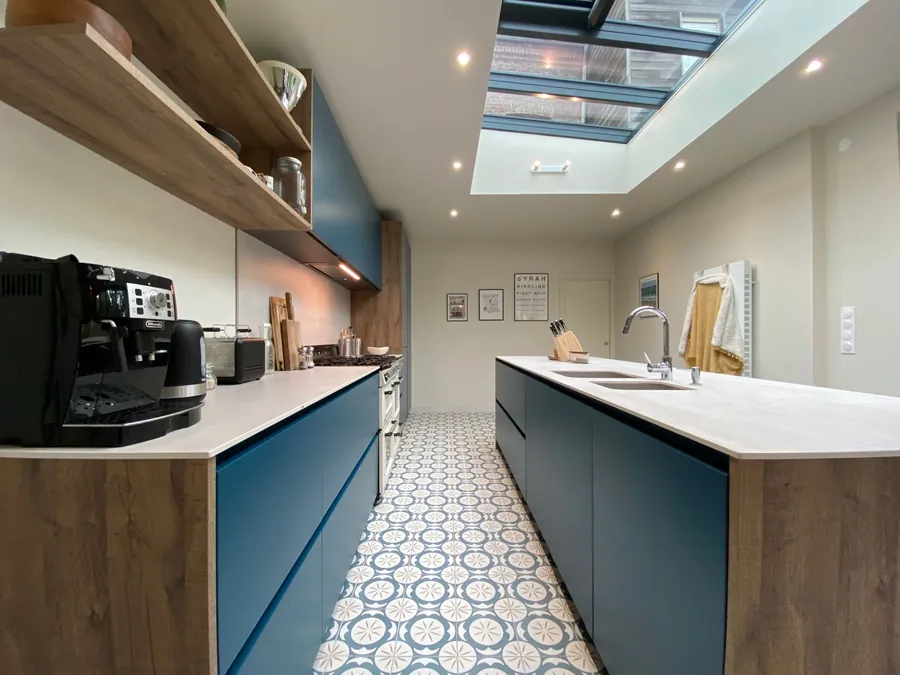
Most Dartford extension roofs we’re asked about are somewhere between 10m² and 20m², which is why we use 15m² as our reference point. At that size, EPDM or GRP fitted properly on a sound deck is usually £2,200 to £4,200. The spread comes down to three things. How much of the deck is rotten. Whether insulation is being added (more on that below). And access.
Access is a real cost on the terraces. Many streets in central Dartford and Crayford have no side passage, so everything going up and everything coming off goes through the house. Rolls of membrane, sheets of board, bags of old felt. A good roofer allows time for dust sheets and careful carrying, and that time is in the price. A skip on the road also needs a permit from Kent County Council as the highway authority, which the roofer usually arranges and includes.
Extensions also meet the house, and that junction is where most of them leak. The new membrane has to turn up the wall and sit under a lead or metal flashing chased into the brickwork, not stop short with a bead of mastic. If a quote doesn’t mention the wall abutment, ask about it.
Dormers, bays, porches and the small roofs nobody looks at
Small flat roofs cost less, though not in proportion to their size. A dormer roof a fraction of the size of an extension can still run to four figures, because getting up there costs much the same.
Box dormers on loft conversions are the obvious example. You need a tower or a scaffold just to reach one, and the most important detail is at the back, where the flat roof meets the tiles or slates of the main roof. Re-covering a dormer, bay or porch roof is usually £450 to £1,300. Where the dormer needs scaffold rather than a tower, it will sit at the top of that band or above it.
Bay windows on Victorian and Edwardian houses are a slightly different case. Some have small flat roofs in felt that would be better redone in lead or GRP, which suits the curve and lasts longer. Porches and canopies turn up on houses of every age, including the newer estates around Stone and Ebbsfleet, and they’re usually the smallest and quickest of the lot.
Felt, EPDM or GRP: how the material changes the bill
Most people ask about materials first. It’s rarely what decides the price.

Torch-on felt is usually the cheapest to lay and the easiest to patch. Modern built-up felt is far better than the single-layer stuff that went onto garages in the 1970s, but it still has the shortest life of the three, roughly 15 to 25 years. EPDM rubber goes down as one bonded sheet with no flame, which suits plain rectangles like most garages and extensions, and it commonly lasts 20 to 40 years. GRP fibreglass is laid wet and cures hard, so it copes with foot traffic and fiddly shapes, which is why it’s often the pick for dormers and balconies. Expect 20 to 30 years or more.
On a typical Dartford extension, the price difference between the three is a few hundred pounds, not thousands, because the strip-out, deck, trims, upstands and access cost the same whichever goes on top. So pick on lifespan and on what suits the roof, not on the cheapest line. From the flat roofs we’ve priced around Dartford, the jobs that come back to us early are almost never about which membrane was chosen. They’re about a deck that was left damp or an upstand that was too short.
Patch it, overlay it or strip it back?
You have three options with a tired flat roof, at three very different prices.
A patch is right when the problem is in one place. A split where a ladder was leant, a blister, a lifted edge or a failed seal round an outlet. On an otherwise sound roof that’s £150 to £400 well spent. Our roof repair costs guide for Dartford prices the common small jobs if that’s all yours needs.
An overlay means laying a new membrane over the old one. It’s cheaper because nothing comes off, and some firms will offer it readily. It only works if the old roof is dry and well bonded and the deck underneath is sound, and you can’t confirm any of that without cutting into it. Seal damp in and the boards keep rotting out of sight.
A full strip is the dearer option and usually the right one once a roof is past about 20 years, has been patched more than once, or feels spongy when you press on it. It tells you exactly what you’re building on. Our rule of thumb: if two patches in three years haven’t stopped the leak, put the money for a third towards a new roof.
What’s under the membrane: deck rot, insulation and Part L
Two costs can’t be pinned down from the garden: the state of the deck, and whether the roof has to be insulated.
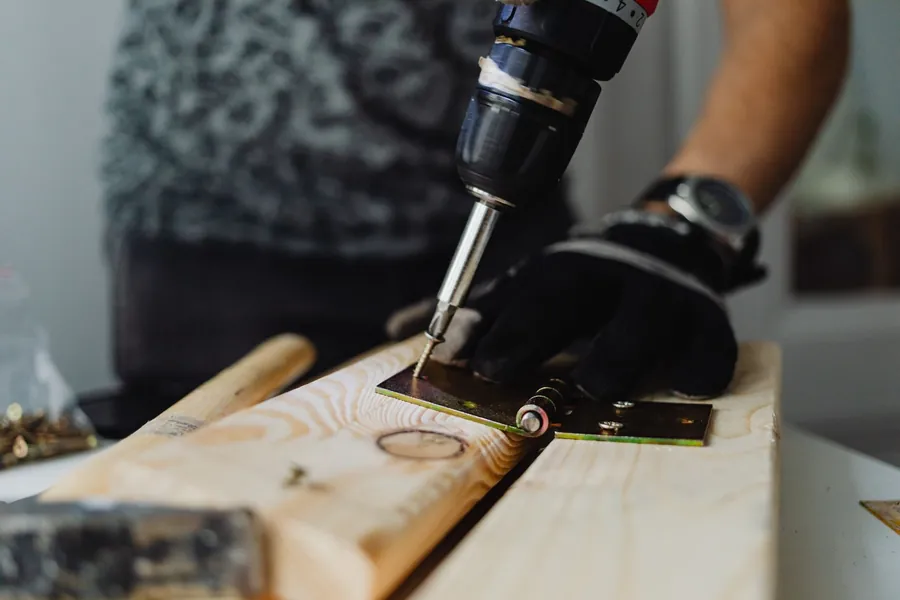
Plenty of 1960s and 70s flat roofs in Dartford were decked in chipboard, which swells and crumbles once it gets wet. Ask for a rate per sheet for replacement decking in the quote, rather than an open-ended “extras”. That way a few soft boards don’t turn into a blank cheque, and you can see what you’re paying for.
Insulation is the bigger one. A roof over a heated room is a “thermal element” in Building Regulations terms. When it’s stripped and re-covered, the regulations usually expect it to be upgraded to current standards where that’s technically possible and pays for itself within a reasonable period. For a renovated flat roof, Approved Document L on the conservation of fuel and power sets a target U-value of 0.16 W/m²K. In practice that usually means a warm-deck build-up of rigid insulation boards on top of the deck, which adds material cost and raises the roof level. That higher level can affect the wall flashing, the upstand at a door and the fascia, so all of it should be priced.
Whether the job needs a building control application depends on how much of the roof and the building is affected. The Planning Portal’s guide to re-roofing and the Building Regulations sets out the thresholds. Ask your roofer who is handling it and get it in writing, because a missing completion certificate can come back to bite when you sell.
Frequently asked questions
How much does it cost to replace a flat garage roof in Dartford?
Re-covering a single garage in EPDM rubber usually costs £1,300 to £2,400 in 2026, depending on its size and how much of the deck has to be replaced. If the old roof is asbestos cement sheeting that needs removing first, expect around £1,800 to £3,500. Double garages and garage blocks are priced after a survey.
Is felt cheaper than EPDM or GRP for a flat roof?
Torch-on felt is usually the cheapest of the three to lay, but the gap is smaller than people expect because the labour, access, deck and edge details cost the same whichever membrane goes on top. Felt also tends to have the shortest life, roughly 15 to 25 years, against 20 years or more for a well-fitted EPDM or GRP roof.
Do I have to add insulation when I replace my extension's flat roof?
Often, yes. If the roof over a heated room is being stripped and replaced, the Building Regulations usually expect the insulation to be brought up to current standards where that is practical and cost-effective. An unheated detached garage normally does not need it. Your roofer or building control can confirm what applies to your roof.
When is a flat roof repair no longer worth it?
If the deck feels soft underfoot, the roof has been patched more than once in the last few years, water is pooling across a wide area, or the felt is cracked all over rather than in one spot, replacement is usually the better spend. A single split or a lifted edge on an otherwise sound roof is normally worth repairing.
Want a Dartford roofer to look at yours?
A roofer will come out, check it from the loft and the outside, and give you a written price. Dartford, Crayford, Bexley, Swanley and nearby.