
20 October 2026
Chimney Repairs In Dartford: What Goes Wrong And What Each Job Costs
Chimney repairs in Dartford: repointing, rebuilding the top, flaunching, cowls, lead flashing and taking a stack down, with 2026 prices and party wall rules.
Chimney repairs in Dartford make up a steady share of our work, and it’s easy to see why once you look along any street in the older part of town. Most houses here were built when every room had a fireplace, so the stacks are big, there are a lot of them, and plenty haven’t seen a fire since gas central heating arrived. A stack is about the only brickwork on a house that gets weather from four sides and over the top as well. Put that next to the Thames, where wind comes in off the river and the marshes with little to slow it down, and mortar on a chimney wears out years before the walls below it. In 2026 our chimney prices run from about £450 for new lead to £2,800 for taking a stack down, plus scaffold. Below is what tends to fail on each type of Dartford house, what the fix involves and what it costs.
Why Dartford chimneys fail where they do
Different streets give us different problems, and the age of the house usually tells us where to look first.

The Victorian and Edwardian terraces around the town centre and up West Hill have the busiest stacks. One stack often carries four or more flues, two from each house, and sits right on the party wall. The bricks are soft and the original mortar was lime, so the joints wash out slowly over a century of rain. The 1930s semis towards Dartford Heath usually share one tall stack at the middle of the pair, standing well above the ridge with nothing round it to break the wind. On the postwar estates such as Temple Hill, the stacks are smaller and simpler, but a lot of them haven’t served a fire in decades. Those are the ones we’re most often asked to take down.
Whichever street you’re on, the damage shows up in a few places: open joints in the brickwork, cracked mortar round the pots, and lead that has lifted or split where the stack goes through the roof. Our chimney repairs service in Dartford starts with a survey of the whole stack, both halves if it’s shared, so you know which of these you’re dealing with before anyone talks about price.
Repointing a chimney stack: when the joints have gone
Repointing is the most common chimney job we price. You can usually spot the need from the pavement: joints that look recessed or sandy, or bricks with a dark shadow round them where the mortar used to be.
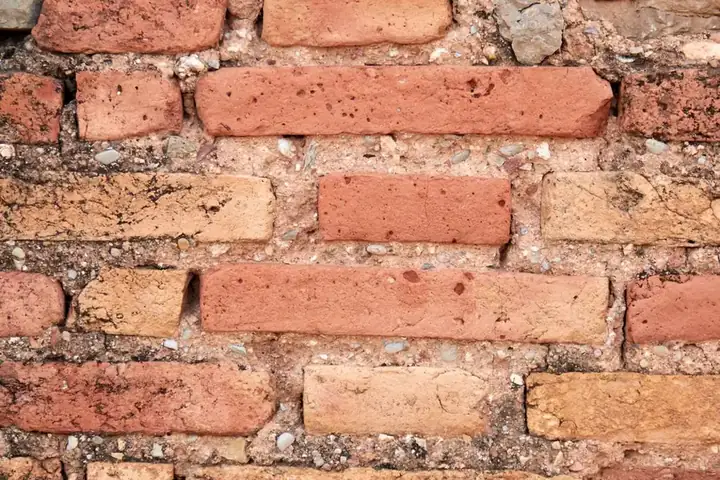
The job itself is straightforward but slow. Old mortar is raked out to a sound depth, roughly twice the height of the joint, and the joints are refilled and finished to throw water off. On older Dartford brick we steer clear of hard cement mortar. Cement sets harder than the brick, so moisture comes out through the brick faces instead of the joints, and the faces start to flake off. A softer, more breathable mix lasts better on a Victorian stack.
Our price for repointing a stack and renewing the flaunching is £650 to £1,900 in 2026. A short stack on a postwar semi sits at the bottom of that range. A tall, four-flue terrace stack that needs every joint raked out sits at the top.
Rebuilding above the roofline
Sometimes repointing isn’t enough. When the top few courses have loosened, cracked right through or started to lean, the honest answer is to take them down and lay them again.
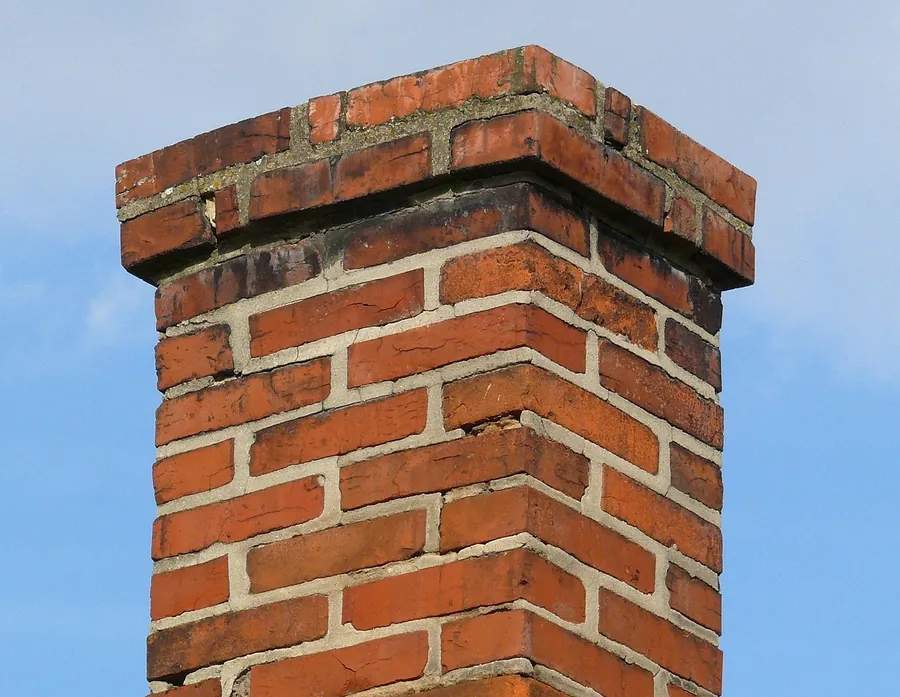
On stacks that burned coal for decades, the usual cause is sulphate attack. Sulphates from the smoke soak into the mortar, react with it over the years and make it swell, usually more on one side than the other, so the stack slowly bends. Frost finishes off what’s left. A lean that’s stable may only need watching. A lean that’s getting worse, or loose bricks above a front path, needs dealing with soon.
A rebuild means taking the brickwork down to a sound course, cleaning and reusing the bricks where their faces are good, and laying them back on a fresh bed with new flaunching at the top. We price rebuilds after a survey because the depth varies so much, but expect it to cost more than repointing the same stack. If a damp-proof tray is needed to stop water tracking down inside, that’s added and listed separately.
Flaunching, pots, cowls and caps
The very top of a stack takes the worst of the weather, and it’s where small problems turn into wet chimney breasts.

Flaunching is the sloped mortar collar that holds the pots and sheds water off the top of the stack. Once it cracks, rain runs straight down into the brickwork, and in winter the frost widens the crack. Renewing it is normally part of a repointing job, which is why our repointing price includes it. Loose pots get rebedded in the new flaunching at the same time.
What goes on top of each pot depends on what the flue does. A flue serving an open fire wants a clear pot or a rain cowl. A flue you’ve stopped using should be capped with a vented cap, with some ventilation at the bottom too, so it doesn’t fill up with condensation. A gas fire needs a terminal approved for gas, and a wood burner normally runs through a liner with its own matching top. For stoves, HETAS’s advice for wood stove owners covers liners, sweeping and registered installers. Fitting a cowl or cap costs very little once the scaffold is already up for other work. On its own, the access is most of the bill.
Lead flashing where the stack meets the roof
When a chimney breast upstairs shows a damp patch, more often than not the stack’s bricks are fine and the lead is to blame.
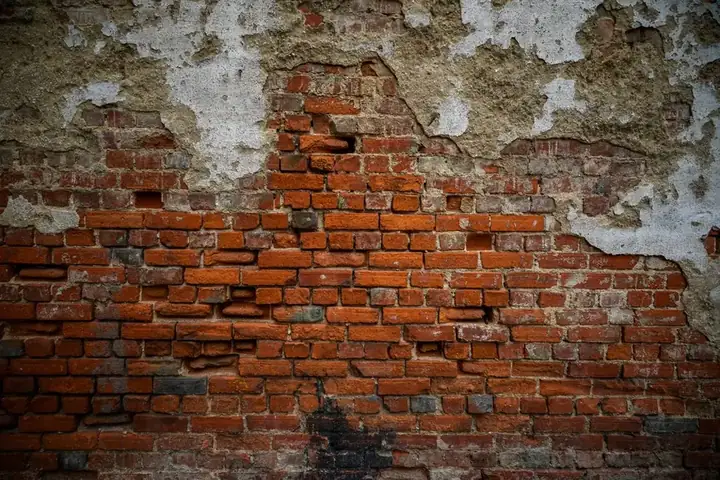
A stack going through a pitched roof has three sets of lead: stepped flashings down each side, an apron across the front and a back gutter behind it where water collects. The back gutter fails most often, because everything running down the roof above the stack drops into it. On Dartford terraces we also find a lot of old repairs done with mortar fillets or tubes of sealant instead of lead. They hold for a winter or two, then crack away from the brick, and the water gets in behind them.
New flashings are cut to manageable lengths, dressed to the roof and tucked into a raked-out mortar joint, then wedged and pointed. The Lead Sheet Training Academy trains roofers in this and keeps a directory of traditional metal roofers, which is worth a look if you want to check how the work should be done. Our price for new lead round a typical Dartford stack is £450 to £1,300. There’s more on flashings and back gutters on our leadwork page.
Taking a redundant stack down: building regs and your neighbour
If nobody has lit a fire in the house for thirty years and the stack leaks every winter, removal is often the sensible answer. We’d rather say so than re-lead the same stack for the third time. It comes down to below the roof, the gap is felted, battened and tiled to match, and the leak goes with it. Our price for that is £1,200 to £2,800.

On a detached house that’s mostly a roofing job. On a terrace or a pair of semis it’s more involved, because the stack usually straddles the party wall and half of it belongs next door. GOV.UK’s guidance on party walls and building work names removing chimneys from a party wall as work you must tell your neighbour about. Written notice has to go in between two months and a year before you start, and your neighbour has 14 days to agree in writing. If one of the flues on their side still serves a gas fire or stove, the stack can’t come down without making other arrangements for it, so that conversation needs to happen before anyone books scaffold.
Building regulations come into it when the chimney breast inside is coming out as well. What’s left above has to be properly supported, and that needs building control approval. Taking down just the stack above the roof is usually a simpler matter, but planning rules still apply to listed buildings, and if your house is in Dartford’s town centre conservation area it’s worth asking Dartford Borough Council first.
Scaffolding, and what chimney repairs in Dartford cost overall
Almost every chimney job needs a safe working platform round the stack, and on a terrace that usually means scaffold.

On a semi with a drive, a tower or a roof-mounted chimney scaffold can sometimes do the job. On a terraced street where the scaffold has to stand on the pavement, it needs a licence from Kent County Council as highway authority, and the scaffolder’s costs come through in the price. For a single stack on a terrace, scaffold typically adds £500 to £1,200. On a shared stack, splitting one scaffold between both households is usually the cheapest way to get the whole thing done.
Here are our 2026 chimney prices in one place, VAT included:
| Chimney job | Typical 2026 price |
|---|---|
| New lead flashings, apron and back gutter | £450 - £1,300 |
| Repoint the stack and renew the flaunching | £650 - £1,900 |
| Rebuild loose or leaning top courses | Priced after survey, above repointing |
| Remove an unused stack and tile over the gap | £1,200 - £2,800 |
| Scaffold for one stack on a terrace | £500 - £1,200 |
If scaffold is going up anyway, it’s worth getting the ridge and gutters on that side looked at while it’s there. Our roof repair costs guide for Dartford prices those jobs too, so you can see what adding them would cost.
Frequently asked questions
How much does it cost to repoint a chimney in Dartford?
Our 2026 price for repointing a stack and renewing the flaunching is £650 to £1,900. Where it lands depends on how tall the stack is, how many flues it carries and how deep the old mortar has gone. Scaffold sits on the quote as a separate line, typically £500 to £1,200 for one stack on a terrace.
Do I need to tell my neighbour before taking down a shared chimney stack?
Yes. GOV.UK lists removing chimneys from a party wall as work your neighbour must be told about under the Party Wall Act. Notice goes in writing between two months and a year before the work starts, and your neighbour has 14 days to reply. On a shared stack, their half is theirs to agree to.
Is a cowl the same as a chimney cap?
Not quite. A cowl sits on a working flue and keeps out rain and birds, or helps the draw on a windy roof, while letting smoke or fumes escape. A cap closes off a flue nobody uses, but it should still be vented so the flue can breathe. Gas fires and wood burners each need a terminal made for that appliance.
Can lead flashing round a chimney be repaired, or does it need replacing?
A single lifted step that has slipped out of its joint can sometimes be wedged back and repointed. If the lead is split, thin or has been patched with sealant before, new lead is the better spend. Our price for new flashings round a typical Dartford stack is £450 to £1,300.
Want a Dartford roofer to look at yours?
A roofer will come out, check it from the loft and the outside, and give you a written price. Dartford, Crayford, Bexley, Swanley and nearby.